

What to Expect at Your First Visit
Introduction
Taking that first step toward specialised wound care can feel uncertain. Whether you have been referred by your doctor, were discharged from hospital with an unhealed wound, or noticed that a sore is simply not getting better on its own, coming to a wound care clinic in Nairobi is one of the most important decisions you can make for your recovery.
At VitalCare Wound & Ostomy Clinic, we understand that patients often arrive feeling anxious, unsure of what to bring, what will happen, or how long the appointment will take. This guide is written to take the uncertainty out of your first visit — so you can arrive informed, prepared, and confident.
Below, we walk you through everything: what happens before you arrive, how your wound is assessed, what treatments may be recommended, and what to expect in the weeks that follow.
Who Needs a Wound Care Specialist?
Many Nairobi residents visit general outpatient clinics or pharmacies when they have a wound. For minor cuts and abrasions, this is often sufficient. However, certain wounds require the skills of a certified wound care nurse or specialist — a professional trained specifically in complex wound management.
You should consider visiting a wound care clinic if you have any of the following:
- A wound that has not healed after four weeks of standard treatment
- A diabetic foot ulcer, whether shallow or deep
- A pressure injury (bedsore) from prolonged immobility or hospital admission
- A surgical wound that has opened up (dehisced) or shows signs of infection
- A leg or venous ulcer — often characterised by swelling, discolouration, and pain around the ankle
- A wound producing large amounts of discharge, or one with an unusual colour or odour
- A fungating wound or a wound related to cancer treatment
- Post-operative care needs following colostomy, ileostomy, or urostomy surgery
Delayed wound healing in Kenya is often complicated by diabetes, hypertension-related vascular changes, anaemia, and inadequate nutrition — all of which are addressed as part of holistic wound care at VitalCare.
Before Your Appointment — How to Prepare
A little preparation before your first visit to our Nairobi wound care clinic will help us begin your assessment without delay.
Documents to Bring
- Referral letter from your doctor, surgeon, or hospital (if you have one)
- National ID or passport and your SHIF card or private insurance card
- A list of current medications — including antibiotics, anticoagulants, diabetes medications, and supplements
- Previous wound photographs if you have taken them at home, and any prior laboratory results (wound swabs, blood glucose readings, HbA1c, full blood count)
- Discharge summary if you were recently hospitalised
Practical Tips
- Wear loose, comfortable clothing that allows easy access to the wound area
- If the wound is on your foot or lower leg, avoid tight socks and bring open sandals if possible
- Do not remove your existing dressing before arriving unless specifically instructed — the wound care nurse will remove it safely under controlled conditions
- Eat a nutritious meal before your visit, especially if you have diabetes or are on blood-thinning medications
- Plan for an appointment that may last between 45 and 90 minutes for a comprehensive first assessment
Arriving at VitalCare — Your First Impressions
From the moment you arrive, our team is committed to making you feel safe and respected. Our reception staff will verify your details, confirm your insurance or payment method, and guide you through any necessary admission paperwork.
We maintain a calm, clinical environment designed to minimise cross-infection risk. All clinical areas are cleaned and disinfected between patients, and our wound dressing supplies are opened fresh for each individual case.
If you are arriving with a caregiver, family member, or home-based nursing support, they are welcome to accompany you. For patients with mobility challenges, please notify us in advance so we can arrange appropriate seating and assistance.
The Wound Assessment — A Thorough, Systematic Process
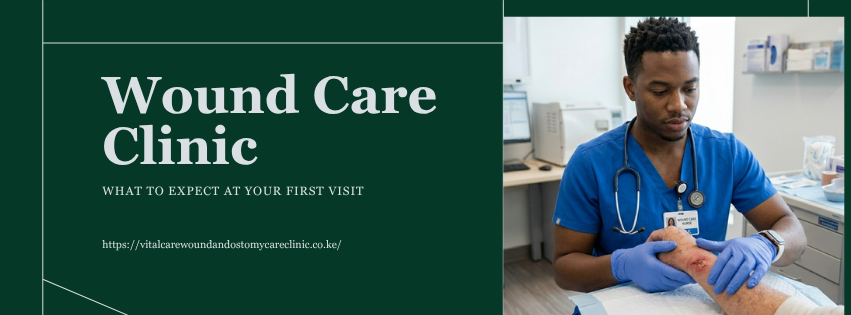
The most important part of your first visit is the comprehensive wound assessment. This is not simply a matter of looking at the wound — it is a structured clinical evaluation that determines the correct diagnosis and treatment pathway.
At VitalCare, we assess every wound using a standardised framework that examines the following parameters:
1. Wound Type and Cause (Etiology)
We begin by establishing the underlying cause of the wound. Is it a diabetic foot ulcer driven by neuropathy and poor circulation? A venous leg ulcer caused by insufficient blood return? A pressure injury from prolonged bed rest? Identifying the cause is essential — treating a wound without addressing its root cause leads to recurrence.
2. Location and Dimensions
The nurse will measure the wound’s length, width, and depth using a calibrated probe and wound ruler. Undermining — where tissue is destroyed beneath intact skin at the wound margins — is also assessed. These measurements form a baseline against which future progress is tracked.
3. Tissue Type
Wounds contain different types of tissue that indicate their healing stage:
- Granulation tissue (red, moist, and beefy) indicates active healing
- Slough (yellow or cream soft tissue) indicates devitalised tissue that may require debridement
- Eschar (black or brown hard tissue) indicates necrosis and usually requires removal
- Epithelialising tissue (pink, fragile skin at wound edges) indicates near-complete healing
4. Exudate Level and Type
Wound exudate — the fluid produced by the wound — is evaluated in terms of volume (none, low, moderate, or high) and character (serous, serosanguineous, sanguineous, or purulent). Excessive or malodorous exudate is a key indicator of infection or biofilm.
5. Periwound Skin Condition
The skin surrounding the wound is equally important. We assess for maceration (softening due to moisture), excoriation (irritation from exudate or adhesive dressings), oedema, erythema, induration, and hyperpigmentation — all of which influence dressing selection and moisture management.
6. Signs of Infection
Wound infection in Nairobi’s climate can progress rapidly. We screen for both local and systemic infection indicators: increased wound pain, warmth, swelling, purulent discharge, odour, delayed healing, and in severe cases, fever or raised inflammatory markers. Where infection is suspected, a wound swab is collected and sent for culture and sensitivity testing.
7. Pain Assessment
Wound pain is assessed using a standardised pain scale, and its character is noted — whether it is constant, related to dressing changes, or worsened by specific activities. Pain management is integrated into your care plan from the outset.
What makes VitalCare different: Our nurses document every assessment parameter digitally, enabling precise wound tracking at each follow-up visit. You will always know whether your wound is improving — because we can show you the measurements.
Your Personalised Wound Care Treatment Plan
Following the assessment, your wound care specialist will explain their findings clearly — in plain language, without medical jargon. You will then receive a personalised wound care treatment plan tailored to your wound type, lifestyle, and health background.
Wound Debridement
If your wound contains slough, necrotic tissue, or biofilm, debridement — the removal of this devitalised material — is often the first active treatment step. At VitalCare, we use evidence-based debridement methods:
- Autolytic debridement: using moisture-retentive dressings to allow the body’s own enzymes to liquefy dead tissue — gentle and pain-free
- Mechanical debridement: using irrigation or wound irrigation syringes to loosen debris
- Sharp debridement: the precise removal of necrotic tissue using sterile instruments, performed only by trained wound care nurses
Advanced Wound Dressing Selection
The dressing chosen for your wound is not arbitrary. It is selected based on your wound’s tissue type, exudate level, infection status, and periwound condition. At VitalCare, we use internationally recognised advanced wound care dressings, including:
- Foam dressings — for moderate to high exudate wounds
- Hydrocolloid dressings — for dry, shallow wounds with low exudate
- Alginate dressings — for highly exuding or bleeding wounds
- Silver-impregnated dressings — for infected or critically colonised wounds
- Hydrofibre dressings — for deep wounds with significant exudate
- Antimicrobial dressings — for wounds at risk of persistent biofilm
Compression Therapy
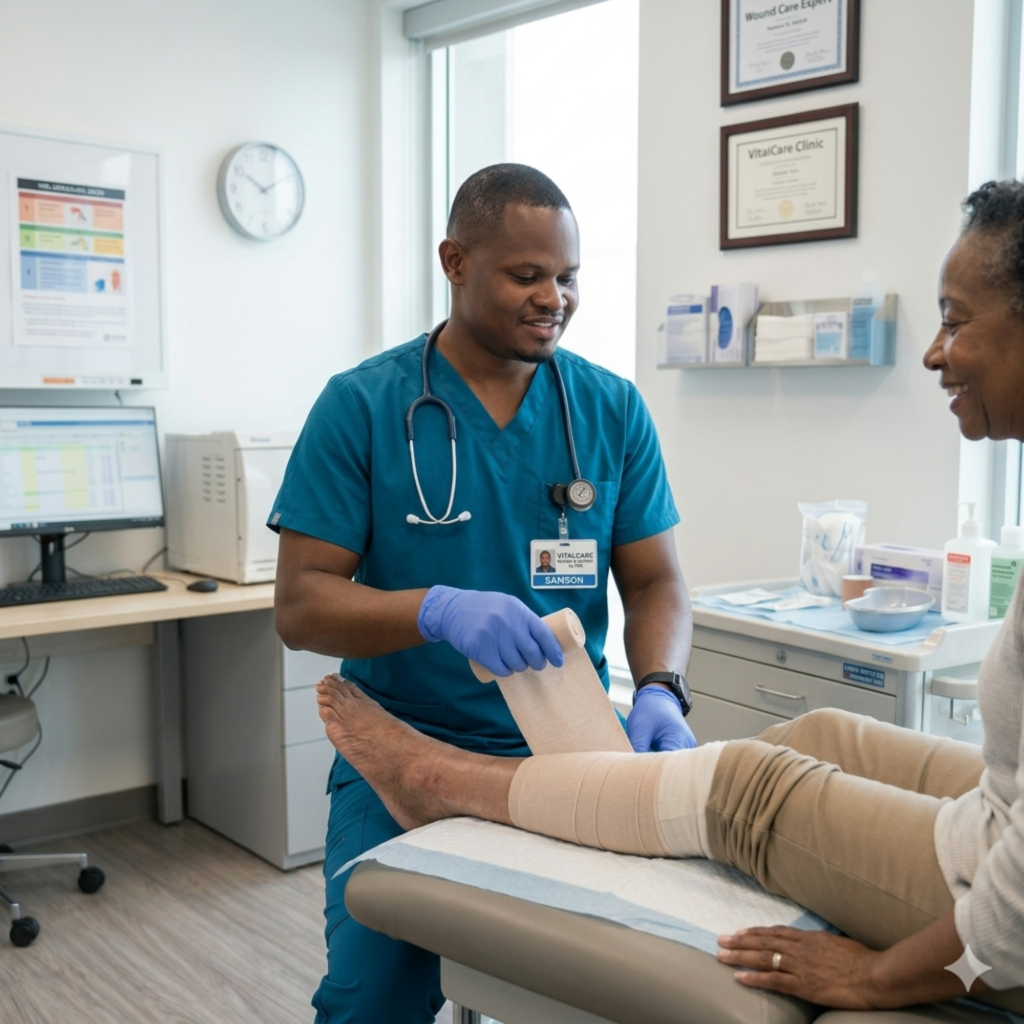
For patients with venous leg ulcers or lower limb oedema, graduated compression therapy is a cornerstone of treatment. Our team applies compression bandaging or recommends medical-grade compression hosiery, tailored to your ankle-brachial index (ABI) measurement to ensure it is safe for your circulation.
Infection Management
Where infection is confirmed, your wound care plan may include topical antimicrobial dressings and — in collaboration with your doctor — systemic antibiotics guided by culture and sensitivity results. We work closely with general practitioners, physicians, and surgeons across Nairobi to ensure coordinated care.
Nutritional and Systemic Support
Wound healing is a whole-body process. Poor nutrition — particularly protein, zinc, vitamin C, and iron deficiency — significantly delays recovery. Your nurse will assess nutritional risk and may refer you to a dietitian or recommend targeted supplementation alongside your wound treatment.
Insurance, NHIF, and Payment at VitalCare
We know that cost is a real concern for many patients seeking specialised wound care in Nairobi. VitalCare Wound & Ostomy Clinic is committed to making expert wound care accessible.
- We are currently not accepting SHIF (Social Hospital Insurance Fund) for wound care services as we are not accredited.
- We work with most major private insurance providers in Kenya — where help you claim for reimbursement
- Cash payment and mobile money (M-PESA) options are also available
Tip: Contact your insurer in advance to confirm your wound care benefit limits and whether a referral letter is required for reimbursement
Home-Based Wound Care in Nairobi
For patients who are immobile, elderly, post-operative, or simply unable to travel regularly to the clinic, VitalCare offers home-based wound care services across Nairobi and its environs.
A qualified wound care nurse visits your home on a scheduled basis to assess and redress your wound, monitor healing, and adjust the care plan as needed. Home visits are particularly valuable for:
- Patients with large pressure injuries or complex surgical wounds
- Elderly patients who are bedridden or have limited family support for transport
- Post-surgical patients recovering at home following abdominal, orthopaedic, or vascular procedures
- Patients with ostomies who require ongoing stoma care and pouch management support
Contact us to discuss availability and scheduling for home-based wound care in your area.
Follow-Up and Monitoring — What Happens After Your First Visit
Wound healing is not a one-appointment process. At VitalCare, every patient receives a clear follow-up schedule based on their wound type and acuity. Most patients require weekly dressing changes, though some wounds — particularly those with heavy exudate or active infection — may need more frequent attendance in the early phase.
At each follow-up, your nurse will:
- Measure and photograph your wound to document progress
- Reassess the wound’s tissue composition and exudate level
- Change or upgrade your dressing as the wound evolves through its healing stages
- Review your pain levels, nutritional status, and any new symptoms
- Liaise with your referring doctor or specialist as needed
As your wound improves, appointments are spaced further apart. Our goal at every stage is the same: complete wound healing, with the lowest possible risk of recurrence.
Book Your First Appointment at VitalCare
You do not have to manage a difficult wound alone. VitalCare Wound & Ostomy Clinic brings specialist expertise, advanced dressings, and compassionate care to patients across Nairobi. Whether your wound is new or has been troubling you for months, our team is ready to help you heal.
Call or WhatsApp us to book your appointment today.
VitalCare Wound & Ostomy Clinic | Nairobi, Kenya
This article is intended for patient education and general information only. It does not constitute medical advice. Please consult a qualified wound care specialist for diagnosis and treatment of any wound condition.