
Introduction
Foot complications are common in people with diabetes, but not all foot problems are the same. One of the most serious and often misunderstood conditions is Charcot foot, especially when it is associated with osteomyelitis (a bone infection).
Many people confuse this condition with a typical diabetic foot ulcer. However, Charcot foot with osteomyelitis is far more complex and dangerous. It requires early diagnosis and a different approach to treatment.
In this article, you will learn:
- What Charcot foot is
- How it differs from a regular diabetic ulcer
- How osteomyelitis complicates Charcot foot
- How to recognize and manage the condition effectively
Foot complications are common in people with diabetes, but not all foot problems are the same. One of the most serious and often misunderstood conditions is Charcot foot, especially when it is associated with osteomyelitis (a bone infection).
Many people confuse this condition with a typical diabetic foot ulcer. However, Charcot foot with osteomyelitis is far more complex and dangerous. It requires early diagnosis and a different approach to treatment.
In this article, you will learn:
- What Charcot foot is
- How it differs from a regular diabetic ulcer
- How osteomyelitis complicates Charcot foot
- How to recognize and manage the condition effectively
Foot complications are common in people with diabetes, but not all foot problems are the same. One of the most serious and often misunderstood conditions is Charcot foot, especially when it is associated with osteomyelitis (a bone infection).
Many people confuse this condition with a typical diabetic foot ulcer. However, Charcot foot with osteomyelitis is far more complex and dangerous. It requires early diagnosis and a different approach to treatment.
In this article, you will learn:
- What Charcot foot is
- How it differs from a regular diabetic ulcer
- How osteomyelitis complicates Charcot foot
- How to recognize and manage the condition effectively
Key signs of Charcot foot include:
- Swelling
- Warmth
- Redness (often mistaken for cellulitis)
- Minimal or no pain due to neuropathy
- Progressive deformity (e.g., a “rocker-bottom” foot)
If not treated early, the foot can collapse, leading to ulcers and even amputation.
Foot complications are common in people with diabetes, but not all foot problems are the same. One of the most serious and often misunderstood conditions is Charcot foot, especially when it is associated with osteomyelitis (a bone infection).
Many people confuse this condition with a typical diabetic foot ulcer. However, Charcot foot with osteomyelitis is far more complex and dangerous. It requires early diagnosis and a different approach to treatment.

In this article, you will learn:
- What Charcot foot is
- How it differs from a regular diabetic ulcer
- How osteomyelitis complicates Charcot foot
- How to recognize and manage the condition effectively
Osteomyelitis is an infection of the bone. In diabetic patients, it usually occurs when bacteria enter through:
- A chronic or deep ulcer
- Open wounds or trauma
- Surgery or infected soft tissues
When Charcot foot develops an ulcer that reaches down to the bone, bacteria can infect the weakened bone, creating a very challenging situation for both the patient and the healthcare team.
How is Charcot Foot with Osteomyelitis Different from a Regular Diabetic Ulcer?
Here’s a side-by-side comparison:
| Feature | Charcot Foot with Osteomyelitis | Typical Diabetic Foot Ulcer |
| Cause | Neuropathy + bone collapse + infection | Pressure and trauma on numb skin |
| Appearance | Swollen, warm, red foot, possibly deformed | Localized ulcer on pressure point |
| Bone Involvement | Always (due to Charcot + possible infection) | Not unless ulcer becomes deep |
| Pain | Often absent due to neuropathy | Pain varies, can be tender |
| Progression | Rapid joint collapse if untreated | Slow unless infected |
| Amputation Risk | High if missed or untreated | Moderate; higher if infected |
Common Presentation of Charcot Foot with Osteomyelitis
A patient may present with:
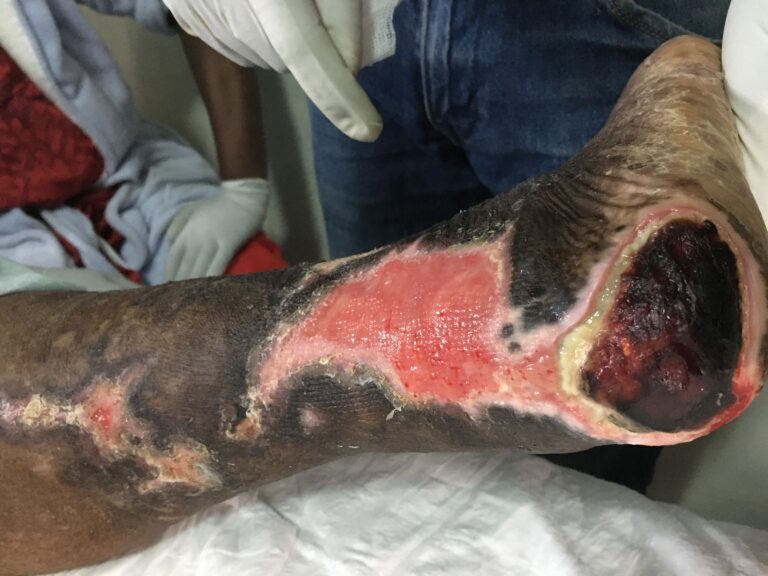
- A red, swollen, warm foot (often mistaken for cellulitis)
- An ulcer, sometimes deep enough to expose bone
- Very little or no pain despite the severity
- Systemic symptoms may be absent or mild
Warning signs of osteomyelitis include:
- An ulcer that has been present for over two weeks
- A positive probe-to-bone test
- Elevated inflammatory markers (like ESR, CRP, or WBC)
- X-ray or MRI showing bone infection or destruction
Diagnosis
- Physical examination: Check for swelling, warmth, deformity, and open ulcers.
- X-ray: May show bone collapse or fragmentation.
- MRI: Best tool for detecting early bone and soft tissue infections.
- Laboratory tests: ESR, CRP, WBC count.
- Probe-to-bone test: A simple clinical test—if bone is felt through the ulcer, osteomyelitis is likely.
Management
Charcot Foot (without infection):
- Total contact cast or orthotic boot for offloading
- Complete immobilization to prevent further damage
- Close monitoring over several months
- Surgery only if deformity worsens or becomes unmanageable
Charcot Foot with Osteomyelitis:
- Long-term antibiotics (6–12 weeks), based on culture results
- Surgical debridement to remove infected bone or tissue
- Amputation in cases where the foot is unsalvageable
- Multidisciplinary care: wound care, infectious disease, orthopedic surgery, and diabetes management
The Role of Wound and Ostomy Care
As wound care specialists, early recognition and coordinated management are key. Our responsibilities include:
- Monitoring high-risk diabetic feet
- Educating patients on foot hygiene and warning signs
- Managing ulcers with proper debridement and dressing selection
- Referring for imaging and surgical review when needed
Conclusion
Charcot foot with osteomyelitis is not just another diabetic ulcer. It is a serious, fast-progressing, and potentially limb-threatening condition that requires urgent attention.
If you’re a healthcare provider, always suspect Charcot foot in a red, swollen, painless diabetic foot.
If you’re a patient, never ignore changes in your foot’s shape, color, or warmth. Acting early can save your limb—and your life.
Need expert diabetic foot care in Nairobi? Contact VitalCare today for assessment and management.