
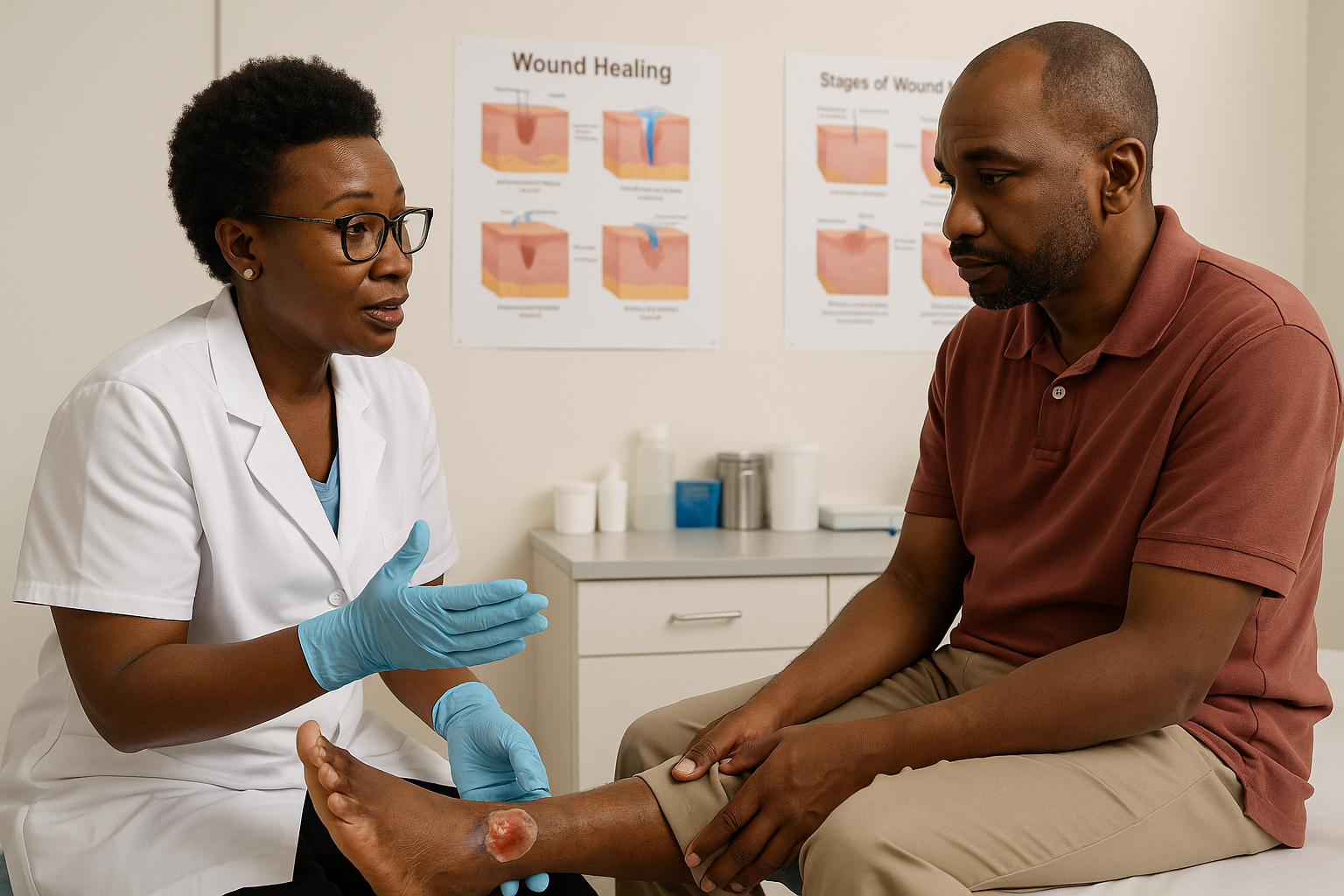
Cancer-related wounds—particularly malignant or fungating wounds—are typically seen in advanced stages of breast cancer. These occur when tumors break through the skin or when radiation and chemotherapy compromise tissue integrity. The result can be ulcers that bleed, emit odor, and become prone to infection. These wounds are distressing, painful, and often stigmatizing.

Importantly, such wounds are not a sign of medical failure. They are clinical complications that can be professionally managed to reduce discomfort, prevent infection, and restore quality of life.
Evidence-Based Management of Malignant Wounds
At Stanley Wound & Ostomy Care, we use internationally recognized, oncology-safe protocols to care for wounds in breast cancer patients. Our approach is rooted in science, compassion, and local expertise.
1. Advanced Wound Dressings
We utilize dressings that are specially formulated for cancer-related wounds:
- Silver-based dressings to reduce infection and odor.
- Hydrogels and hydrocolloids to maintain moisture and promote tissue comfort.
- Non-adherent dressings to prevent trauma during changes.
These dressings are selected based on the wound’s location, exudate level, and sensitivity. Our goal is always to minimize pain and maximize patient dignity.
2. Odor and Bleeding Control
Malodorous wounds are a common concern for patients with fungating tumors. We apply charcoal-activated dressings, topical metronidazole, and antiseptic rinses to control odor. For bleeding, we use gentle hemostatic dressings and monitor vascular involvement carefully to avoid unnecessary trauma.
3. Infection Prevention and Management
Immunocompromised patients are at heightened risk for infections. Our team maintains strict hygiene protocols and uses antimicrobial dressings when indicated. Regular reassessment ensures timely interventions if infections arise.
4. Pain and Symptom Management
Pain during dressing changes and daily movement can be significant. We integrate topical anesthetics, oral pain control, and gentle handling techniques to keep patients as comfortable as possible. We also counsel caregivers on how to support patients during at-home care routines.
The Role of Psychosocial Support
Breast cancer wounds affect more than just the skin—they impact confidence, mental health, and social interaction. We understand this deeply. Our approach to care is not just clinical—it’s human. We prioritize:
- Patient education about the wound and its management
- Counseling support for emotional well-being
- Family involvement, especially for home-based care
Breast Cancer Is Not a Death Sentence
Despite the rising numbers, breast cancer is treatable, and survival rates are improving with early detection and integrated care. Even for those living with malignant wounds, there is so much that can be done to restore comfort and well-being.
At VitalCare, we remind our patients that:
A diagnosis is not the end. A wound is not a defeat. Healing takes many forms—and it begins with care.
We’ve seen patients who, despite living with advanced disease, regain their confidence and independence with the right wound care. You deserve that too
Why Patients Trust VitalCare Wound & Ostomy Care
- Specialist-Led: Managed by certified wound care experts with oncology experience.
- Personalized: Every care plan is tailored to the patient’s specific clinical and emotional needs.
- Home Visits Available: We deliver compassionate care wherever you are—clinic or home.
- Up-to-Date Practices: We apply the latest science in wound healing and palliative care.
- Collaborative Care: We work closely with your oncologist and care team for continuity.
If you or someone you love is struggling with wounds related to breast cancer, know that you are not alone—and that there is effective, compassionate care available. Our clinic in Nairobi is ready to serve you with dignity, professionalism, and empathy.
VitalCare Wound & Ostomy Care
Compassionate Care. Evidence-Based Healing. Hope Restored.
📍 Nairobi, Kenya
📞 +254 701287584)
🌐
