

Introduction
Heart failure is a serious condition that affects not only the heart but also the entire circulatory system. One of the lesser-known but dangerous complications of severe heart failure is the development of leg ulcers and, in advanced cases, gangrene.
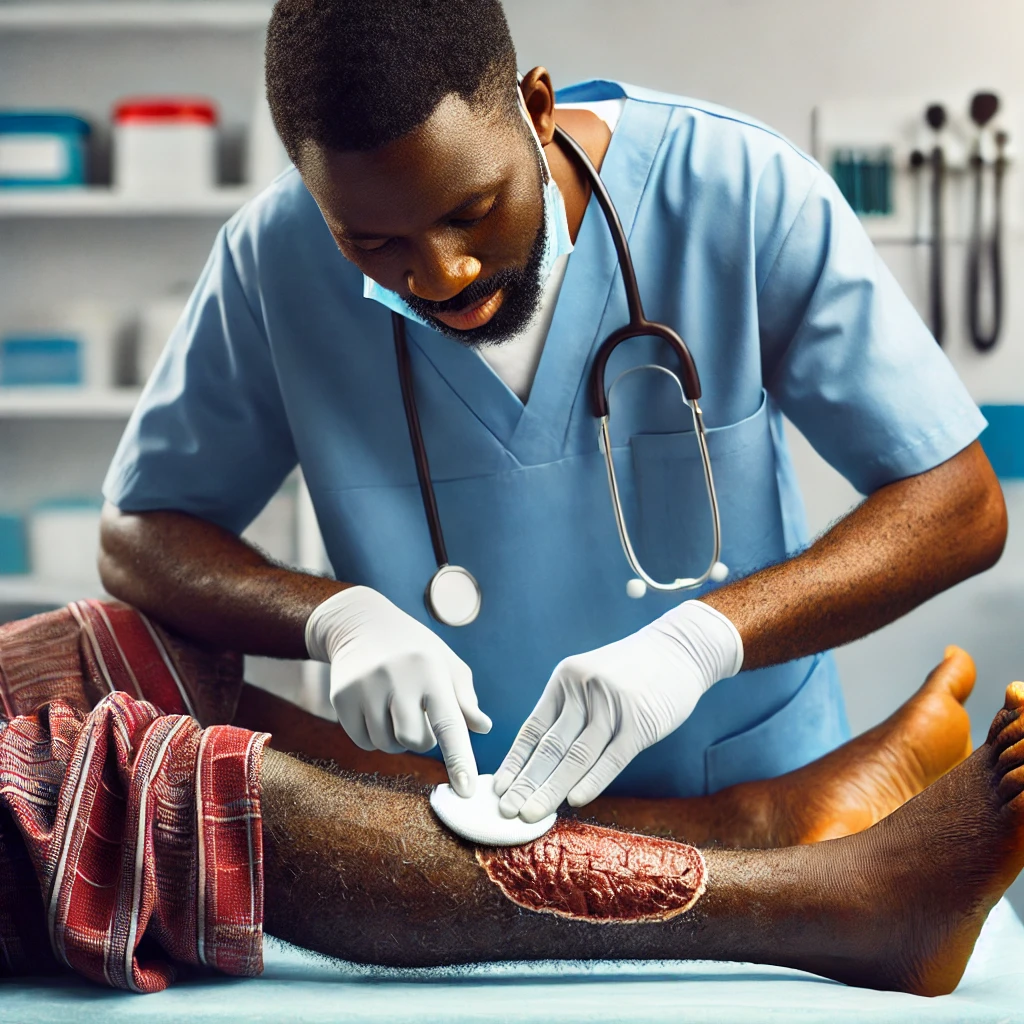
These complications often begin as simple blisters caused by fluid buildup in the legs. Without proper care, they can progress to infection and even limb amputation. This blog explains how this happens and what steps patients and caregivers can take to prevent it.
How Does Heart Failure Lead to Leg Ulcers?
In severe heart failure, the heart can no longer pump blood effectively. This causes fluid retention, especially in the lower limbs. Over time, the skin becomes fragile and prone to injury due to:
- Chronic swelling (edema)
- Poor circulation
- Reduced oxygen supply to tissues
What begins as swelling can turn into:
- Blisters
- Open sores (ulcers)
- Discolored skin
- Infected wounds
Early Warning Signs
Recognizing symptoms early is critical to prevent severe infections or gangrene
Signs of Leg Ulcers:
- Swelling in the feet or ankles
- Skin that looks shiny, tight, or discolored
- Blisters or sores, especially around the ankles
- Pain or heaviness in the legs
Signs of Gangrene:
- Black or blue discoloration of the skin
- Foul-smelling discharge from the wound
- Numbness or loss of sensation
- Fever or chills (signs of systemic infection)
Important: Gangrene is a medical emergency. Seek immediate care if you notice any of the above signs.
Risk Factors That Increase Severity
Certain factors can worsen leg ulcers and increase the risk of gangrene:
- Poor wound hygiene
- Delayed medical intervention
- Uncontrolled diabetes or hypertension
- Smoking
- Prolonged immobility
- Malnutrition
Prevention Tips for Patients with Heart Failure
1.Manage Fluid Retention
- Take your prescribed diuretics
- Elevate your legs to reduce swelling
- Monitor daily weight for sudden increases
2.Inspect Your Legs Daily
- Check for swelling, sores, or color changes
- Keep skin moisturized to avoid cracking
3.Seek Early Wound Care
- Don’t ignore minor wounds or blisters
- Visit a wound care nurse or clinic for evaluation
4.Use Compression Therapy (if advised)
- Wear compression stockings to support circulation
- Only use if prescribed by your healthcare provider
5. Live a Heart-Healthy Lifestyle
- top smoking
- Reduce salt intake
- Keep blood pressure and sugar levels under control
When to See a Wound Care Specialist
At VitalCare Wound & Ostomy Care in Nairobi, we specialize in managing chronic wounds caused by heart failure and other conditions. We offer
- Professional wound assessment
- Evidence-based wound care
- Supportive care to prevent complications
Don’t wait for a small wound to turn into a major problem. Early treatment can save your limb—and your life.
Conclusion
Leg ulcers and gangrene are serious complications of heart failure, but they are preventable with the right care and attention. If you or a loved one is experiencing symptoms, don’t delay.
contact us